MCAT Information and FAQ
The MCAT (Medical College Admission Test) is a 6.25-hour test, consisting of 4 sections: Physical Sciences, Verbal Reasoning, Biological Sciences, and Psychological Section.
Click the links below for answers to commonly asked questions about the MCAT.
- Who takes the MCAT?
- What does the MCAT cover?
- How long is the MCAT?
- How many questions are on the MCAT?
- How is the MCAT scored?
- How long should I prepare for the MCAT?
- How long is an MCAT score valid?
- How much does the MCAT cost?
- Where can I take the MCAT?
- How many times can I take the MCAT?
- When will I receive my MCAT scores?
- What are the test dates for the MCAT?
- Can I cancel my MCAT score?
Who takes the MCAT?
Students take the MCAT who intend to apply to health professions schools, including allopathic, osteopathic, podiatric, and veterinary medicine.
What does the MCAT cover?
The physical sciences test covers physics and general chemistry. The biological sciences test covers biology and organic chemistry, with concentration on biology. The science portions of the MCAT consist mainly of a series of passages, each with several questions or problems. Often the passages involve unfamiliar situations and, rather than numbers, explanations, relationships among various quantities, and extrapolations to new situations.
The verbal reasoning section of the MCAT consists of reading passages designed to test your ability to comprehend, draw inferences from, and find relevant details in a passage. This section is similar to the verbal sections you find on other standardized tests, such as the SAT.
The psychology section covers the psychological, social, and biological foundations of behavior.
How long is the MCAT?
The MCAT is a 6.25-hour test, broken down into the following sections:
| Section | Length |
| Physical Sciences | 95 min |
| Verbal Reasoning | 90 min |
| Biological Sciences | 95 min |
| Psychological Section | 95 min |
How many questions are on the MCAT?
The MCAT is broken down into the following sections for a total of 261 multiple-choice questions:
| Section | Number of Questions |
| Physical Sciences | 67 |
| Verbal Reasoning | 60 |
| Biological Sciences | 67 |
| Psychological Section | 67 |
MCAT Trilogy
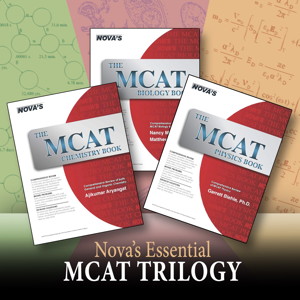
Get all three books for $77.95. A 40% discount. These three books together provide the most comprehensive MCAT prep available.
Purchase The MCAT Trilogy (Domestic) (Free shipping within the United States.) (We do not ship outside of the United States.)
How is the MCAT scored?
The four parts of the test are scored independently. You will receive a physical sciences score, a verbal reasoning score, a biological sciences score, and a psychology score. Each of the sections has a score scale between 118 and 132. So, the total possible score is 528. The mean score for each section is about 125, so the total mean score is about 500.
How long should I prepare for the MCAT?
While every student should tailor his/her study plan to his/her unique situation, it is recommended that you begin studying for the MCAT approximately 3 months before your exam date.
How long is an MCAT score valid?
Medical schools typically accept scores that are within 2-3 years old, though you will need to check with each school to which you are applying to confirm.
How much does the MCAT cost?
The registration fee for taking the MCAT in the United States is $305.
Where can I take the MCAT?
The MCAT is available at a number of computer testing centers nationwide.To reserve a seat, visit https://www.aamc.org/students/applying/mcat/reserving/.
How many times can I take the MCAT?
Most people are better off preparing thoroughly for the test, taking it one time and getting their top score. You can take the test up to three times a year, but some medical schools will average your scores. You should call the schools to which you are applying to find out their policy. Then plan your strategy accordingly.
When will I receive my MCAT scores?
MCAT scores will be released online approximately 30-35 days after it is taken.
What are the test dates for the MCAT?
For a complete list of test dates, click here.
Can I cancel my MCAT score?
Yes. You have the opportunity to void your exam after you have completed it but before leaving the testing center. Your voided score will not be reported on any score reports, though it will count toward your 3-time-per-year limit of taking the MCAT.
